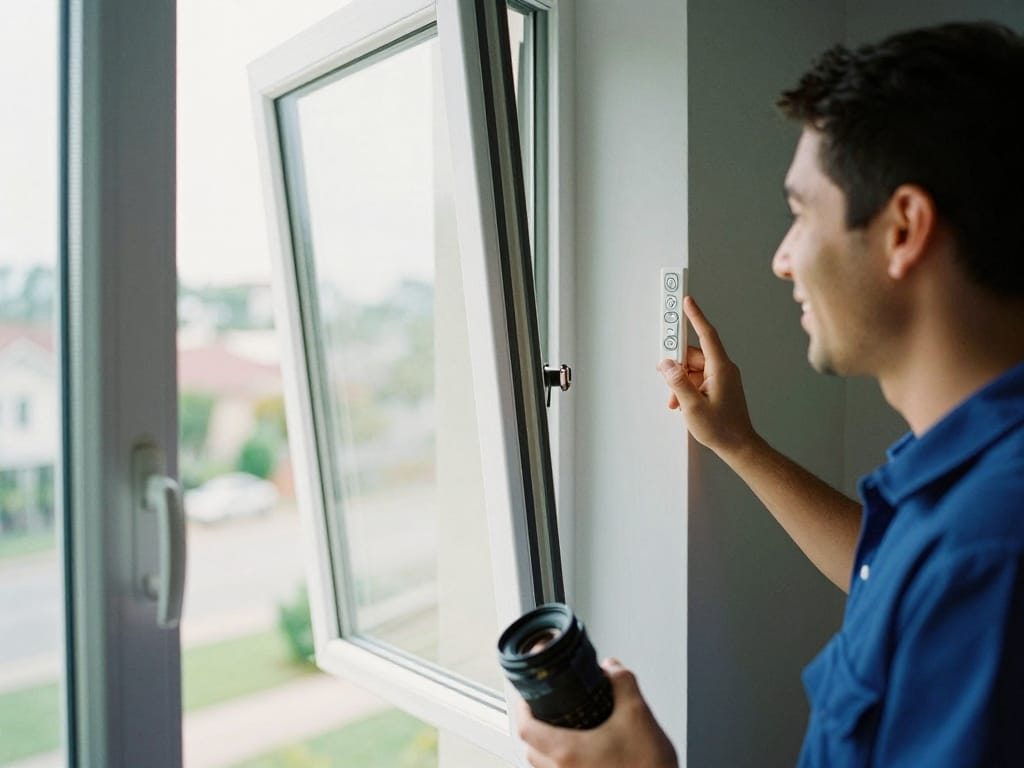
Compatibility between window hardware and shading devices

Compatibility between window hardware and shading devices

Compatibility overview

Find out what to expect with installing new windows with practical tips on sealing, insulation, and alignment..

Matching window hardware with shading devices is key for top performance and durability. When these parts work together, you get better energy use, less wear, and easier operation. Plan for this from the start of any office project, especially in big companies where looks and function matter a lot.

Pick shades, blinds, or shutters that fit your windows. Think about how your windows open—sliding, casement, or awning—and make sure the shades won’t stop the window from moving.

A common error is not checking the weight and how the shade works. Putting heavy roller shades on a light window frame can cause problems. Also, if the shade and window don’t match, you might not get good light control and could spend more on energy.

Ignoring compatibility can lead to higher maintenance costs, shorter life for windows and shades, and safety risks. It’s not just about how things look; it’s about making a safe, efficient, and productive workspace. Make sure all parts work well together.

Citations and other links

Understanding window hardware

Match window hardware with shading devices for smooth operation, energy savings, and safety. Mismatched parts can cause problems, raise maintenance costs, and create hazards, especially in big offices where windows and shades are key for design and energy use.

Check compatibility early in office remodels or new builds. Ignoring this until installation leads to costly fixes or poor performance. Work with manufacturers to ensure window hardware—hinges, locks, operators—fits with your chosen shades, whether blinds, shades, or shutters.

Know the specific window hardware your office uses. Casement windows need different hardware than double-hung windows, each with unique shade compatibility needs. Make sure shade mounting brackets match your window frame material and design.

Don’t assume all hardware is compatible. Incompatible shades may not work well or securely, affecting looks and raising energy use if windows aren’t sealed properly. In the worst cases, mismatched hardware can damage windows and shades, leading to costly repairs or replacements.

Plan carefully and verify compatibility between window hardware and shading devices. This prevents issues, ensures energy efficiency, and keeps your office safe and intact.

Types of shading devices

Market Overview

Knowing the market for shading devices is important. It’s not just about choosing the trendiest blinds. It’s about finding what fits best with your current window hardware. This helps avoid expensive changes and ensures smooth integration. Companies should look into current options, like roller shades, solar screens, and plantation shutters, to find the best match for their needs.

Installation Nuances

Installation isn’t a one-size-fits-all. Each shading device has specific needs. For example, roller shades need a certain type of bracket, while solar screens need tension mechanisms. Ignoring these details can lead to bad installation, reducing effectiveness and lifespan. Proper training for installers is crucial.

Hardware Interaction

How shading devices work with window hardware is key. Some blinds might not fit well with older window frames, causing gaps or improper closure. This affects not just looks but also energy efficiency. Companies must make sure new shading devices work with existing window systems to get the most benefits.

Maintenance Requirements

Maintenance needs vary by shading device. Some need regular cleaning, while others need periodic adjustments. Ignoring these needs can lead to early wear and reduced performance. Setting up a maintenance schedule helps extend the life of shading devices and ensures consistent performance.

Common Pitfalls

Avoiding common mistakes is important. Installing the wrong type of shade can cause issues like light leakage, hard operation, and even damage to window hardware. Companies should be aware of these pitfalls and do thorough research or consult with experts to prevent them. Proper selection and installation save time, money, and hassle in the long run.

Key compatibility factors

Ensuring compatibility between window hardware and shading devices is crucial for function, efficiency, and cost savings. Let’s look at the main factors: size, mounting options, and material considerations.

Size is important. Make sure your window hardware and shading devices match in dimensions. Mismatched sizes can cause problems, reduce efficiency, and create safety hazards. Address this during the planning phase.

Mounting options matter too. Whether inside, outside, or pocket mount, ensure your hardware supports the chosen style. Unsupported mounting can lead to unstable, unsafe installations.

Don’t ignore material considerations. Different materials react differently. Metal may corrode, and wood might warp. Knowing the materials helps you avoid issues and choose compatible options.

Overlooking these factors can lead to failed installations, costly repairs, and safety incidents. Get these details right to protect your company’s reputation and bottom line.

Installation considerations

Match window hardware with shading devices for smooth operation and good looks in any office. This matters a lot in corporate spaces where worker comfort and energy savings are key. Think about compatibility early when designing renovations or new buildings.

In practice, installation has important steps. Start by measuring window sizes right to pick the right shading gear. Next, check if your current window hardware can handle the extra weight and moving parts of the shading device. Stick to the maker’s instructions for both the hardware and shading devices to prevent problems.

Typical errors include not checking if the window frame can hold the weight, missing the correct placement of mounting brackets, and not thinking about how far the shading device moves. These slip-ups can cause shades to break, harm window frames, and create safety issues.

Getting it wrong leads to big problems. You could see higher repair bills, shorter life for the hardware and shades, and safety threats for staff. It’s not just about looks; it’s about making a safe, cozy, and efficient place to work.

Common compatibility issues

Matching window hardware with shading devices is key for smooth operations and happy employees in big organizations. When they don't match, you face higher maintenance costs, lower energy efficiency, and safety risks. Fixing this early saves resources later.

Start by checking your current window setups. Note mounting styles, materials, and any limits. Then, pick shading devices that fit your windows. Choose roller shades for tilt windows or vertical blinds for sliding doors.

Don't forget about window frame strength. Some shades are heavy and can damage weaker frames, risking safety. Check weight limits and add support if needed.

Also, pay attention to how shades operate. Automatic shades need the right window hardware to work. Wrong matches cause problems, frustrating staff and raising repair costs.

In short, making sure window hardware and shading devices work together avoids many issues. It makes your setups last longer, stays safe, and keeps the workplace nice. Regular checks and updates keep everything running well, saving you time and money.

Acoustic influence of integrated shading systems

Choosing the right combination

In office environments, the compatibility between window hardware and shading devices matters a lot. It affects employee comfort, productivity, and building energy efficiency. Ignoring this can lead to unhappy employees and higher costs.

Think about this during office renovations or when setting up a new location. Consider both immediate and long-term effects. Start by looking at your office space's specific needs. Things like building orientation, local climate, and work type will influence your choices.

This means picking window hardware that supports your shading devices. For example, if you choose motorized blinds, make sure the window frames can handle the extra weight and mechanisms. It’s not just about fitting; it’s about smooth operation and durability.

Common mistakes include not checking the load-bearing capacity of window frames or picking shading devices that don’t match the existing hardware. These errors can cause system malfunctions, safety hazards, and costly fixes.

If done wrong, you might see higher energy bills from inefficient shading or even window structural issues. In the worst case, poor compatibility can create safety problems, especially with automated systems.

To avoid these issues, talk to vendors early. Make sure they understand your needs and can offer compatible solutions. Regular maintenance checks will help spot potential problems before they get worse.

Case studies and examples

Ensuring compatibility between window hardware and shading devices is key, especially for big companies looking to optimize office environments. This integration directly impacts energy efficiency, employee comfort, and overall operational costs. Prioritize this compatibility during office renovations or new builds. When windows and shading systems work together, they enhance natural light use, reduce reliance on artificial lighting, and contribute to a more sustainable workplace.

In practical terms, this means choosing window hardware that supports various shading options, such as roller blinds, venetian blinds, or automated systems. For example, a multinational corporation recently upgraded its office spaces by installing smart glass windows paired with automated shading systems. This setup allowed for dynamic light control throughout the day, significantly cutting energy costs and improving employee satisfaction.

Common mistakes include overlooking the weight and mechanism compatibility of shading devices with existing window frames. In one case, a company installed heavy roller blinds on lightweight aluminum frames, leading to frame damage and costly repairs. Another frequent error is ignoring the importance of professional installation. DIY attempts often result in misalignment, which can render shading devices ineffective and cause premature wear.

Proper compatibility ensures long-term benefits, avoids unexpected costs, and maintains a professional office environment. Companies must invest in expert consultations to navigate these integrations successfully.

Future trends in compatibility

Matching window hardware with shading devices is key for consumers and businesses, especially those with big facilities or multiple locations. As companies aim for comfortable, productive spaces, integrating these systems is essential.

Trends show a shift to smart window systems that adjust to light, cutting energy costs and boosting comfort. Motorized blinds that sync with building systems show this change. HR pros managing service recognition programs should grasp these integrations for better facility decisions, affecting employee satisfaction and efficiency.

Think about compatibility when planning renovations or new builds. Ignoring it can cause system communication issues, higher energy bills, and unhappy employees.

In practice, pick window hardware and shading devices from makers that promise compatibility. Work with installers who know these systems. Common errors include retrofitting old windows with new, incompatible shades, causing malfunctions and higher maintenance costs.

If not done right, you face system failures that disrupt operations, create uncomfortable work environments, and cause extra expenses. It’s not just about the upfront cost—it’s about long-term reliability and efficiency. Choose carefully, plan ahead, and make sure all parts work together.

FAQs and troubleshooting

Check compatibility between window hardware and shading devices for functionality and longevity. Address this during the initial design phase, especially in environments where natural light management impacts employee well-being and productivity.

Assess compatibility by looking at mounting mechanisms, material compatibility, and operational dynamics between window hardware—hinges, locks, operators—and shading devices like blinds, shades, or shutters. Check manufacturers' specs and, if possible, do physical tests or get professional assessments to confirm compatibility.

Avoid common mistakes like ignoring the weight and operational force of shading devices, which can strain window hardware and cause premature wear or failure. Also, don't mismatch mounting points, as this can lead to improper installation and reduced effectiveness of both the window and shading system.

Incorrect compatibility can cause increased maintenance costs, reduced lifespan of window hardware, compromised shading performance, and potential safety hazards. In extreme cases, it may require costly retrofits or replacements, disrupting office operations and affecting employee satisfaction.

Work with experienced contractors and suppliers who know how to integrate window and shading systems. Schedule regular maintenance checks to ensure ongoing compatibility and performance.

Outline Usage Contract

Match window hardware with shading devices for a smooth-running, happy office. When they don’t fit, you get higher costs, lower productivity, and safety issues. Plan compatibility from the start to dodge future problems and make systems work well together.

To make things work, pick and test parts carefully. Look at your window system’s needs—size, type, how it works. Then, get shades that fit your hardware. Talk to makers or get a pro to check everything lines up.

A common slip-up is not thinking about how heavy or how the windows move when picking shades. Heavy blinds on light windows can break things. Light shades on strong windows might not cover or last well.

Ignoring compatibility leads to big troubles. You’ll see frequent breakdowns, need pricey fixes, or even replacements. Plus, unsafe situations like shades falling off can happen.

So, plan well and check that window hardware and shades work together to save money and keep the workplace safe and efficient.

The Flemish Region (Dutch: Vlaams Gewest, pronounced [ËŒ vlaːː ms x É™ ˈ Ê‹ É› st], generally simply referred to as Flanders (Dutch: Vlaanderen [ˈ vlaːː ndəə r É™(n )], is just one of the three regions of Belgium—-- along with the Walloon Area and the Brussels-Capital Area. Treatment the northern section of the nation, the Flemish Region is largely Dutch-speaking. With a location of 13,626 km2 (5,261 sq mi), it accounts for just 45% of Belgium's territory, yet 58% of its populace. It is just one of the most densely populated regions of Europe with around 500/km2 (1,300/ sq mi). The Flemish Region stands out from the Flemish Area: the last encompasses both the inhabitants of the Flemish Area and the Dutch-speaking minority living in the Brussels-Capital Region. It borders the Netherlands and France.

.

In design, a system is a tool that changes input pressures and motion into a desired collection of outcome pressures and motion. Devices usually include relocating components which may include gears and equipment trains; Belts and chain drives; webcams and followers; Affiliations; Rubbing devices, such as brakes or clutches; Architectural elements such as a frame, bolts, bearings, springtimes, or lubricants; Numerous device aspects, such as splines, pins, or secrets. German scientist Franz Reuleaux defines maker as "a combination of resistant bodies so set up that by their methods the mechanical pressures of nature can be compelled to do work accompanied by particular determinate movement". In this context, his use of equipment is typically analyzed to mean mechanism. The combination of pressure and movement specifies power, and a device manages power to attain a desired set of pressures and activity. A system is usually a piece of a larger procedure, called a mechanical system or maker. Occasionally an entire machine may be referred to as a device; examples are the steering mechanism in a vehicle, or the winding device of a watch. Nonetheless, typically, a set of several systems is called a device.

.

About ChâssisPlus Window Supplier Overijse

Driving Directions in Vlaams-Brabant


chassis en bois
50.787369517282, 4.5814380677345
Starting Point
ChâssisPlus Window Supplier Overijse, Trilpopulierenlaan 23, 3090 Overijse, Belgium
Destination
Open in Google Maps
moustiquaire porte
50.751690810637, 4.3914727333754
Starting Point
ChâssisPlus Window Supplier Overijse, Trilpopulierenlaan 23, 3090 Overijse, Belgium
Destination
Open in Google Maps
chassis bois
50.808147286706, 4.4972759063236
Starting Point
ChâssisPlus Window Supplier Overijse, Trilpopulierenlaan 23, 3090 Overijse, Belgium
Destination
Open in Google Maps
prix d un chassis pvc
50.775547813441, 4.4451296785314
Starting Point
ChâssisPlus Window Supplier Overijse, Trilpopulierenlaan 23, 3090 Overijse, Belgium
Destination
Open in Google Maps
porte de garage
50.772761765917, 4.585360980726
Starting Point
ChâssisPlus Window Supplier Overijse, Trilpopulierenlaan 23, 3090 Overijse, Belgium
Destination
Open in Google Maps
porte exterieur
50.726859675551, 4.4752774626942
Starting Point
ChâssisPlus Window Supplier Overijse, Trilpopulierenlaan 23, 3090 Overijse, Belgium
Destination
Open in Google Maps
chassis bruxelles
50.815925782231, 4.4715313188234
Starting Point
ChâssisPlus Window Supplier Overijse, Trilpopulierenlaan 23, 3090 Overijse, Belgium
Destination
Open in Google Maps
chassis bois bruxelles
50.73396919404, 4.4119655205464
Starting Point
ChâssisPlus Window Supplier Overijse, Trilpopulierenlaan 23, 3090 Overijse, Belgium
Destination
Open in Google Maps
volet electrique
50.75776577416, 4.4614567454926
Starting Point
ChâssisPlus Window Supplier Overijse, Trilpopulierenlaan 23, 3090 Overijse, Belgium
Destination
Open in Google Maps
porte d'entrée
50.816310664282, 4.4060256190832
Starting Point
ChâssisPlus Window Supplier Overijse, Trilpopulierenlaan 23, 3090 Overijse, Belgium
Destination
Open in Google Maps
Google Maps Location
https://www.google.com/maps/dir/?api=1&origin=50.85401729667,4.4760998226916&destination=Ch%C3%A2ssisPlus+Window+Supplier+Overijse%2C+Trilpopulierenlaan+23%2C+3090+Overijse%2C+Belgium&destination_place_id=ChIJs6s0urnbw0cRoOc4ktuXj-w&travelmode=transit&query=fenetre+et+chassis
Click below to open this location on Google Maps
Google Maps Location
https://www.google.com/maps/dir/?api=1&origin=50.839542616326,4.4662706914659&destination=Ch%C3%A2ssisPlus+Window+Supplier+Overijse%2C+Trilpopulierenlaan+23%2C+3090+Overijse%2C+Belgium&destination_place_id=ChIJs6s0urnbw0cRoOc4ktuXj-w&travelmode=driving&query=chassis+alu
Click below to open this location on Google Maps
Google Maps Location
https://www.google.com/maps/dir/?api=1&origin=50.736112061437,4.4724936790316&destination=Ch%C3%A2ssisPlus+Window+Supplier+Overijse%2C+Trilpopulierenlaan+23%2C+3090+Overijse%2C+Belgium&destination_place_id=ChIJs6s0urnbw0cRoOc4ktuXj-w&travelmode=driving&query=porte+exterieur+pvc
Click below to open this location on Google Maps
Google Maps Location
https://www.google.com/maps/dir/?api=1&origin=50.80653398076,4.4368730635526&destination=Ch%C3%A2ssisPlus+Window+Supplier+Overijse%2C+Trilpopulierenlaan+23%2C+3090+Overijse%2C+Belgium&destination_place_id=ChIJs6s0urnbw0cRoOc4ktuXj-w&travelmode=driving&query=volet+exterieur
Click below to open this location on Google Maps
Google Maps Location
https://www.google.com/maps/dir/?api=1&origin=50.737371710121,4.4784136832106&destination=Ch%C3%A2ssisPlus+Window+Supplier+Overijse%2C+Trilpopulierenlaan+23%2C+3090+Overijse%2C+Belgium&destination_place_id=ChIJs6s0urnbw0cRoOc4ktuXj-w&travelmode=transit&query=chassis+pvc+prix
Click below to open this location on Google Maps
Google Maps Location
https://www.google.com/maps/dir/?api=1&origin=50.785552557952,4.4518546083069&destination=Ch%C3%A2ssisPlus+Window+Supplier+Overijse%2C+Trilpopulierenlaan+23%2C+3090+Overijse%2C+Belgium&destination_place_id=ChIJs6s0urnbw0cRoOc4ktuXj-w&travelmode=driving&query=chassis+coulissant
Click below to open this location on Google Maps
Google Maps Location
https://www.google.com/maps/dir/?api=1&origin=50.852616286359,4.5091775152069&destination=Ch%C3%A2ssisPlus+Window+Supplier+Overijse%2C+Trilpopulierenlaan+23%2C+3090+Overijse%2C+Belgium&destination_place_id=ChIJs6s0urnbw0cRoOc4ktuXj-w&travelmode=transit&query=ch%C3%A2ssis+pvc
Click below to open this location on Google Maps
Google Maps Location
https://www.google.com/maps/dir/?api=1&origin=50.787369517282,4.5814380677345&destination=Ch%C3%A2ssisPlus+Window+Supplier+Overijse%2C+Trilpopulierenlaan+23%2C+3090+Overijse%2C+Belgium&destination_place_id=ChIJs6s0urnbw0cRoOc4ktuXj-w&travelmode=transit&query=chassis+en+bois
Click below to open this location on Google Maps
Google Maps Location
https://www.google.com/maps/dir/?api=1&origin=50.726640353645,4.5074928765957&destination=Ch%C3%A2ssisPlus+Window+Supplier+Overijse%2C+Trilpopulierenlaan+23%2C+3090+Overijse%2C+Belgium&destination_place_id=ChIJs6s0urnbw0cRoOc4ktuXj-w&travelmode=transit&query=porte+et+chassis
Click below to open this location on Google Maps
Google Maps Location
https://www.google.com/maps/dir/?api=1&origin=50.827569345428,4.4280636604048&destination=Ch%C3%A2ssisPlus+Window+Supplier+Overijse%2C+Trilpopulierenlaan+23%2C+3090+Overijse%2C+Belgium&destination_place_id=ChIJs6s0urnbw0cRoOc4ktuXj-w&travelmode=transit&query=prix+chassis+pvc
Click below to open this location on Google Maps